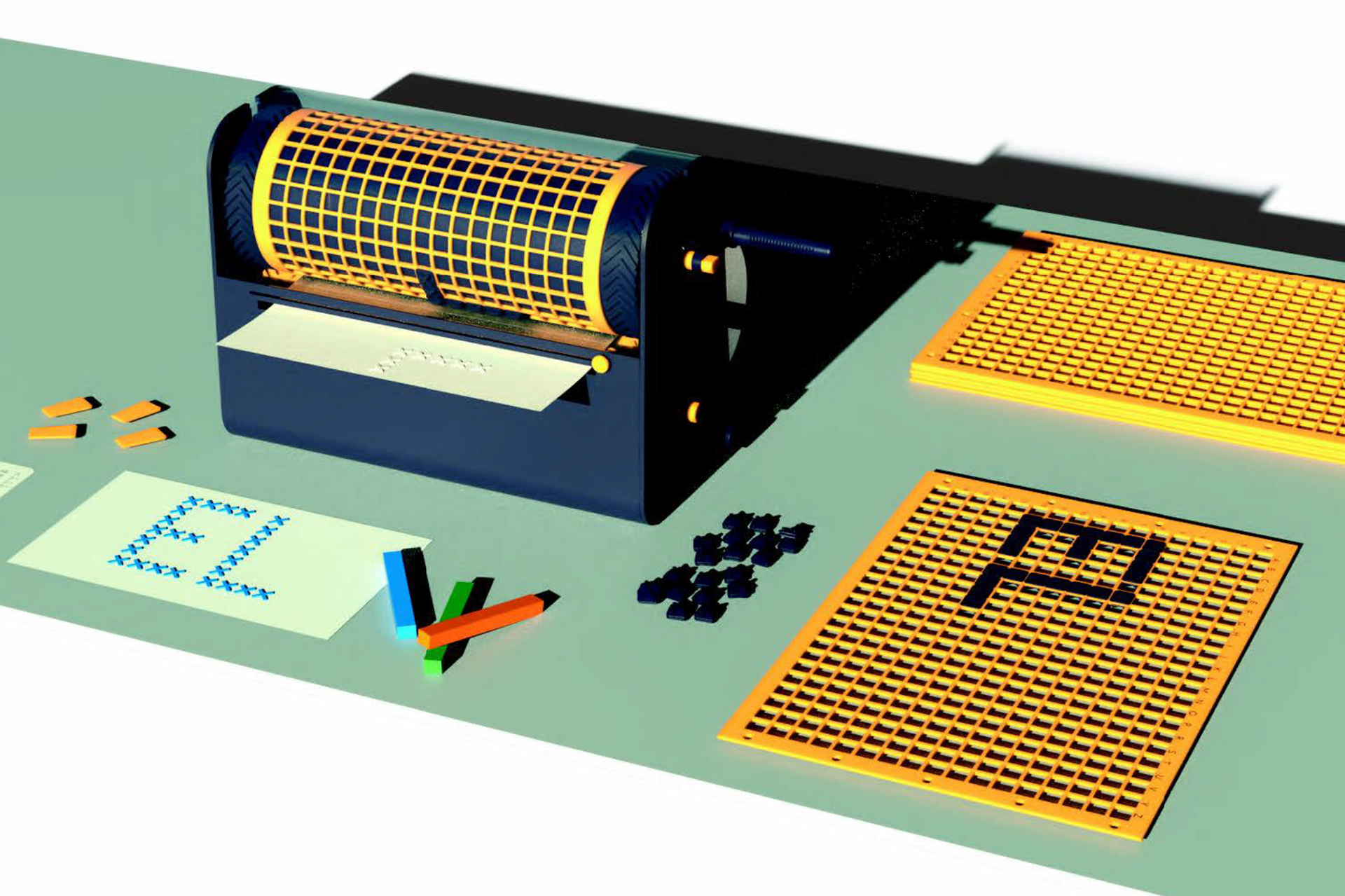
This is a MSc. research project stemmed from a undergraduate system design studio by Elif Ilbay. As a successful output of the Cultural Heritage for Sustainability, this project was progressed into a Master's project under my supervision.
Please see the publication of the preliminary study: https://dl.acm.org/doi/10.1145/3713043.3731507
Cross-stitching, a traditional craft practiced across cultures, holds potential as an educational tool for developing computational thinking (CT) skills in children. While CT is increasingly recognized as essential in modern education, the role of unplugged activities like cross-stitching remains underexplored. This study examines cross-stitching through Kolb’s experiential learning theory and key CT categories, including abstraction, decomposition, algorithmic thinking, evaluation and generalization. Using a qualitative approach, data were collected through interviews with cross-stitch instructors, a preschool teacher, and parents of children engaged in cross-stitching. A priori content analysis identified key aspects: (1) numerical thinking and visual representation ; (2) task breakdown and progressive learning ; (3) sequencing and debugging ; (4) problem solving and learning by doing ; (5) persistence and pattern recognition. The study offers an exemplar for applying an analytical lens to understand the interplay between unplugged activities and computational thinking.