My PhD research proposed a framework of biophilic product dimensions, moving beyond the implementation of natural elements in built environments and biomimetic design to explore stronger biophilic effects on user experience through the lens of evolutionary psychology. Over time, biophilia has become my broader contextual framework, Design for Biophilia, which defines my academic rigor and focuses on environmental resilience through systems design. This approach decentralizes the human within the system by adopting a life-centric perspective, while simultaneously exploring human motivations and frustrations regarding environmental issues to enable systems to function effectively. Rather than treating biophilia as a fixed design principle, I position it as an active interface between humans and ecological systems—a mediation between nature and culture, as well as between biological processes and designed artifacts, and between balanced systems of individuals and communities, much like those found in nature itself.
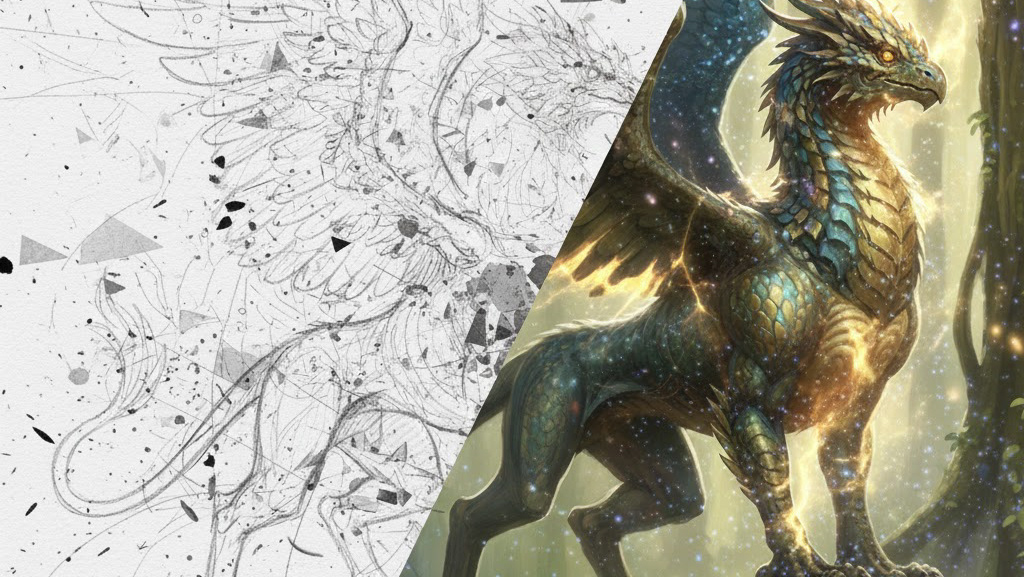
Building on this foundation, my research expanded into the field of communication studies, with a focus on narratives as mediators of meaning and learning. The bio-inspired character design and game narratives project emerged from students’ enthusiasm for a warm-up exercise involving bio-inspired character creation and narrative development in the Bio-inspired Design course. This initial spark evolved into a speculative game design project in which players design characters and narratives grounded in speculative design practices. In this context, the game serves as a mediating environment, a space where users engage experientially with ecological thinking through storytelling and active participation, rather than direct instruction.
To maintain the dynamism between my research and teaching, I build bridges between undergraduate and graduate studies. Thus, students interested in design research find a path for themselves, and I can build a research team. Similarly, another undergrad design project, the Cultural Heritage for Sustainability system design, informed a Master’s thesis developed by a student enrolled in the course, focusing on cross-stitch as an unplugged tool for computational thinking education. This project investigates how traditional craft practices can function as tangible mediators for abstract computational concepts. Translating embodied material practices into algorithmic action opens more inclusive pathways into creative technology education, particularly for youth with limited access to computational thinking opportunities.
Ilbay, E. Boga, E., & Baykal, G. E. 2025. Exploring the Role of Cross-stitch Craft in Development of Children’s Computational Thinking: An Unplugged Approach. In Proceedings of the 24th Interaction Design and Children (IDC '25). Association for Computing Machinery, New York, NY, USA, 923–926. https://doi.org/10.1145/3713043.3731507
Ilbay, E. & Boga, M. (In-press). Sürdürülebilirlik için kültürel miras: Kanaviçeden ilhamla bir sistem önerisi ve egitim aracı tasarımı [Cultural heritage for Sustainability: A system proposal and education material design inspired by cross-stitch].
Boga, M. (2023). In pursuit of a biophilic dialect: The case of mucilage in the Marmara Sea. In C. May (Ed.), Proceedings of Relating Systems Thinking and Design RSD12: Entangled Emergence. https://rsdsymposium.org/biophilic-dialectmarmara-sea/
Boga, M., Turan, G., & Cetinkaya, H. (2022). Biophilic dimensions of products and their effects on user preferences. A|Z ITU Journal of the Faculty of Architecture, 19(2), 353-369. doi: 10.5505/itujfa.2022.76892
Gelmez, K., Boga, M., Efilti, P., Özturan, E., & Yilmaz, O. (2021, April). Dogadan ilhamla ambalaj tasarimi: ITÜ’den örnekler [Nature inspired packaging design: Examples of ITU projects]. Ambalaj Dünyası [Packaging World], 35(177), 76-77.
Boga, M., Turan, G. (2018). Biophilic product design: A bio-inspired approach to user preferences. In G. Getzinger (Eds.), Critical issues in science, technology and society studies: Sustainable and innovative public procurement and ecodesign (pp. 116–129). Verlag der Technischen Universität Graz. https://doi.org/10.3217/978-3-85125-625-3.
Boga-Akyol, M., Timur-Ogut, S. (2016). Exploring Biomimicry in the Students’ Design Process. Design and Technology Education: an International Journal, 21(1), 21-31.